
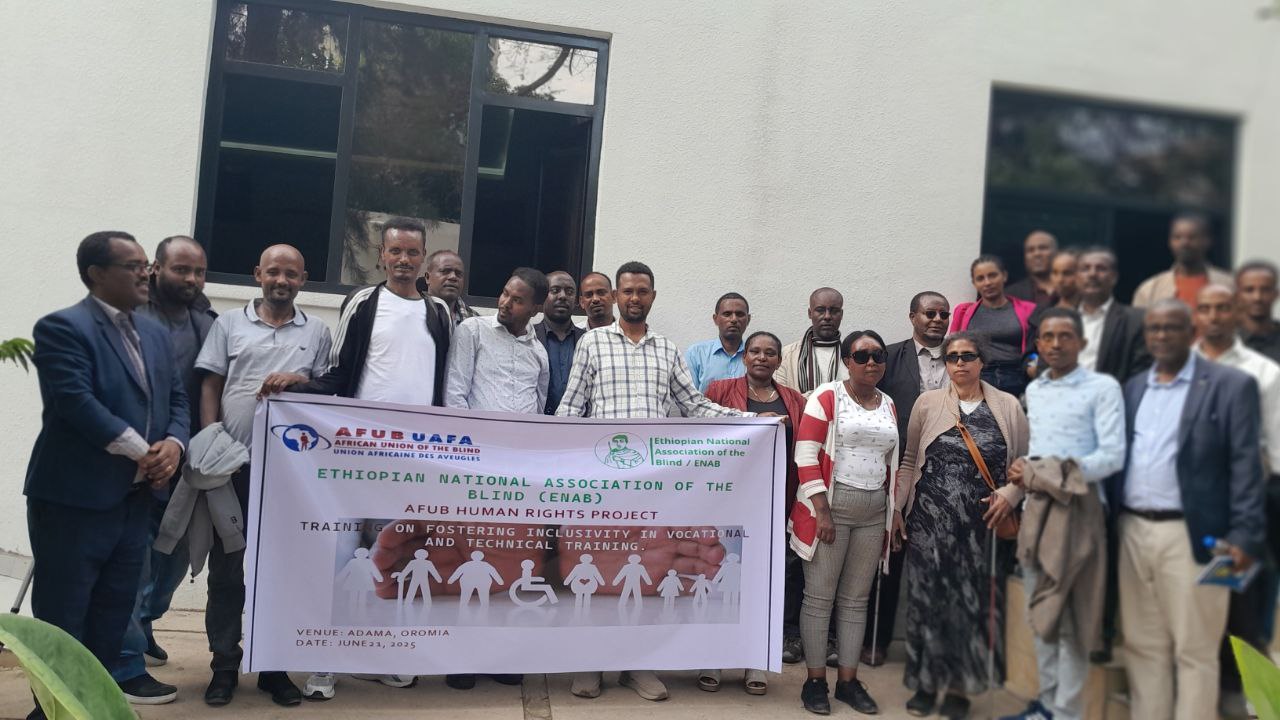
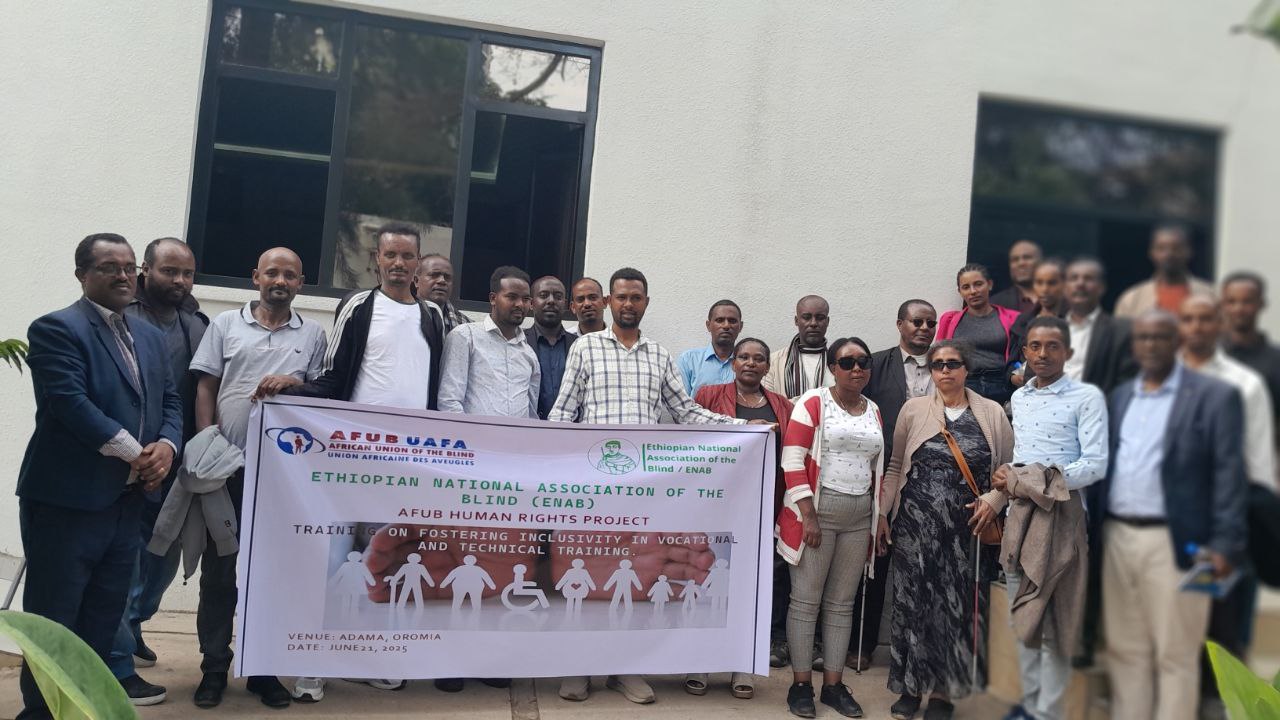
In alignment with its mission to promote the rights, inclusion, and well-being of persons with visual impairments, the Ethiopian National Association of the Blind (ENAB) organized a one-day training workshop titled “Fostering Inclusivity in Vocational and Technical Training” on June 21, 2025, at Safari Lodge in Adama. The training aimed to address persistent barriers faced by blind and visually impaired individuals in accessing vocational and technical education in Ethiopia. It sought to foster dialogue, share experiences, identify gaps, and develop strategies to make TVET systems more inclusive. It also aimed to promote awareness, collaboration, and institutional commitment to inclusive practices.
The workshop gathered stakeholders from 17 polytechnic colleges in Addis Ababa, Sebeta, and Adama, as well as officials from the Federal Ministry of Labor and Skills, Addis Ababa and Oromia Labor Bureaus, the Oromia Bureau of Women and Children Affairs, and the Federal TVET Institute. Their participation reflected a growing recognition of the shared responsibility in advancing inclusive education.
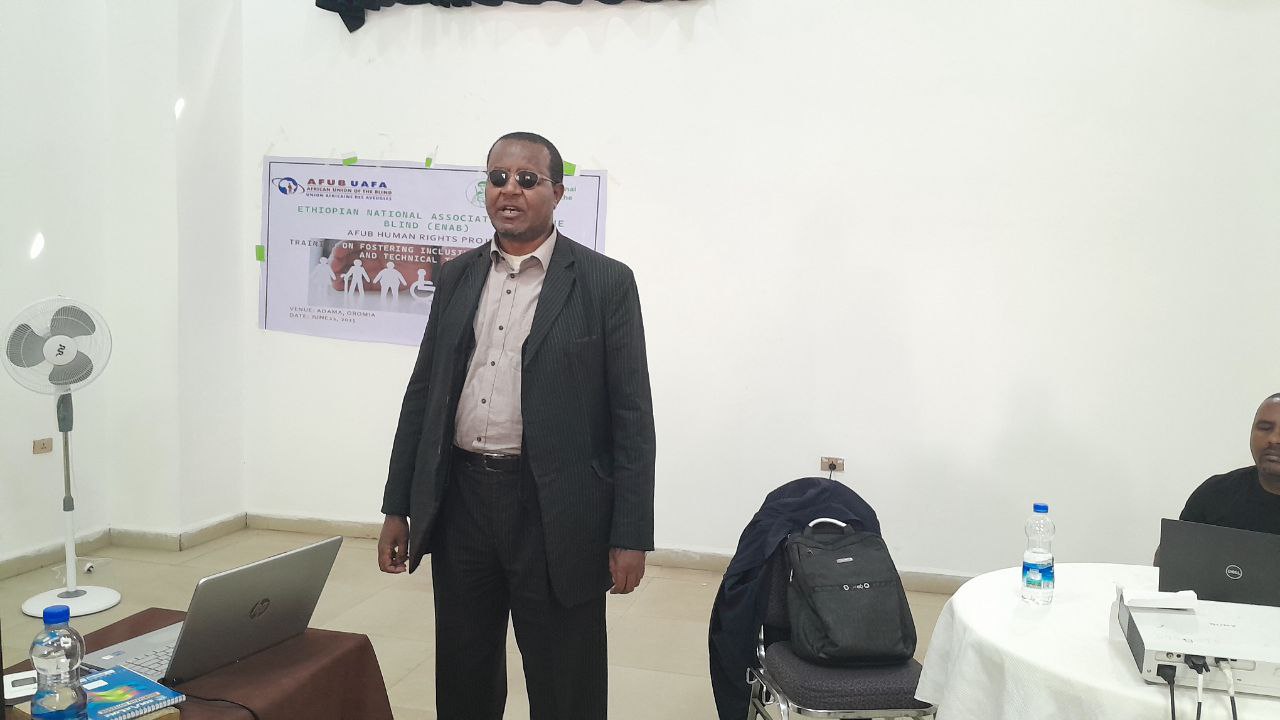
The event began with opening remarks from Ato Gebre Teshome, Head of Branch and Members Affairs and Public Relations at ENAB, who emphasized the historical exclusion of blind persons from TVET and the need for accessible, supportive learning environments. The training session was led by Candidate Dr. Yilikal Hasabe, a legal expert and disability rights consultant, who provided an analytical presentation on legal, institutional, and practical aspects of inclusivity in Ethiopia’s vocational education system, setting the stage for group discussions and interactive activities.
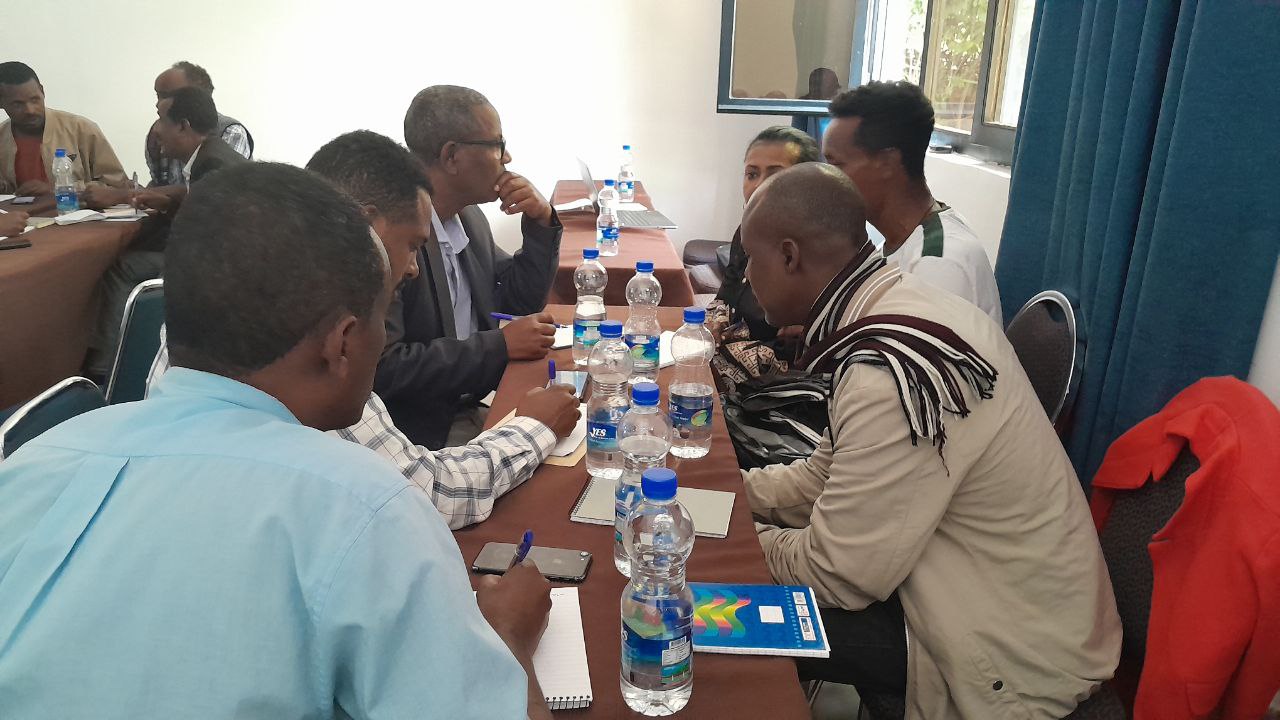
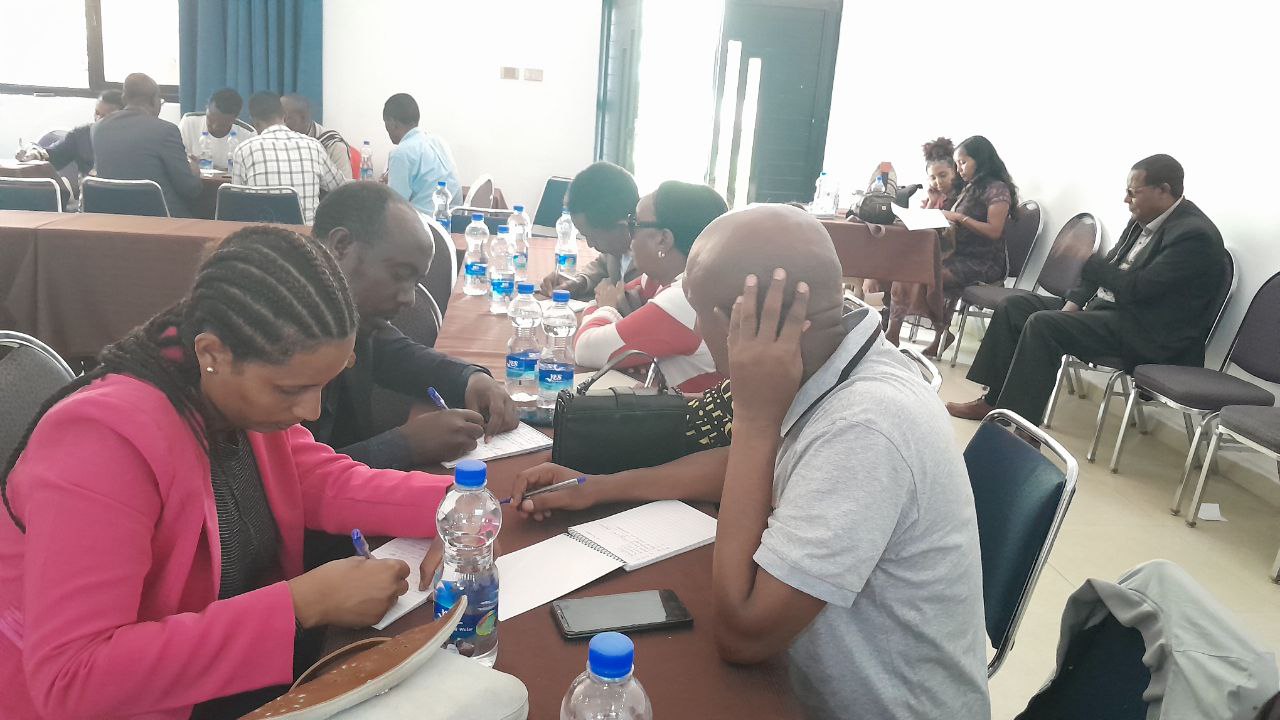
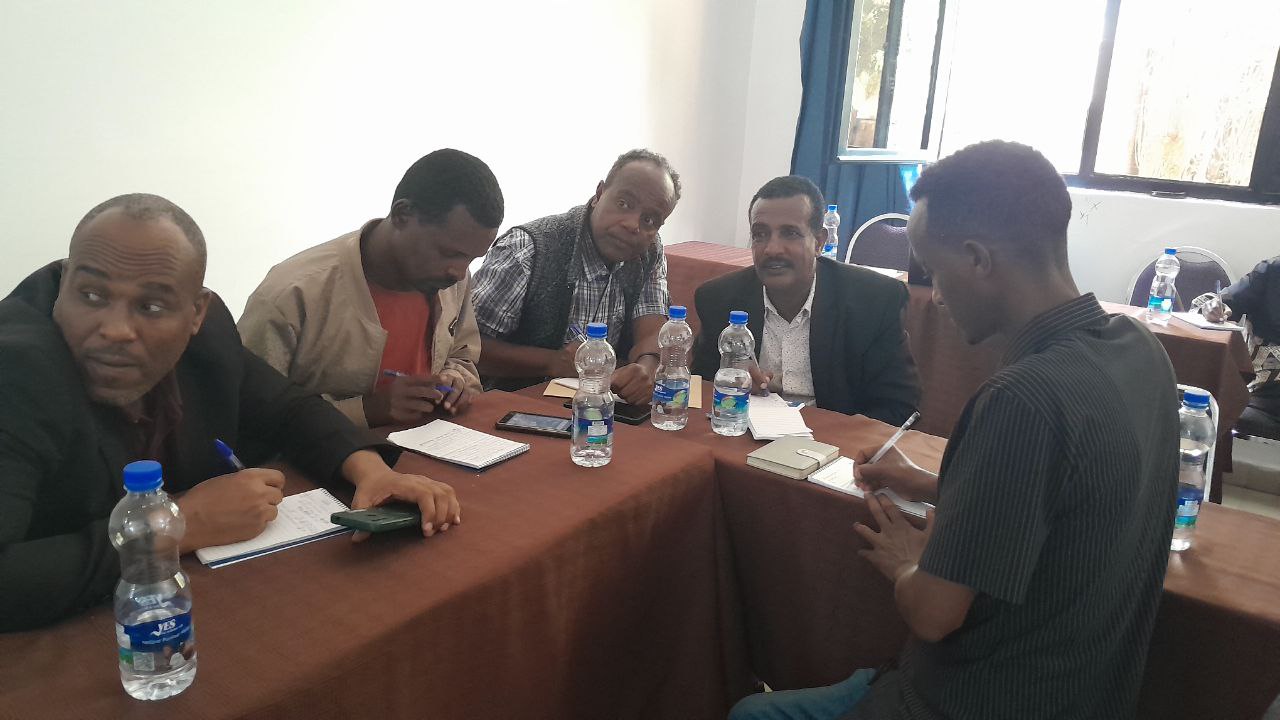
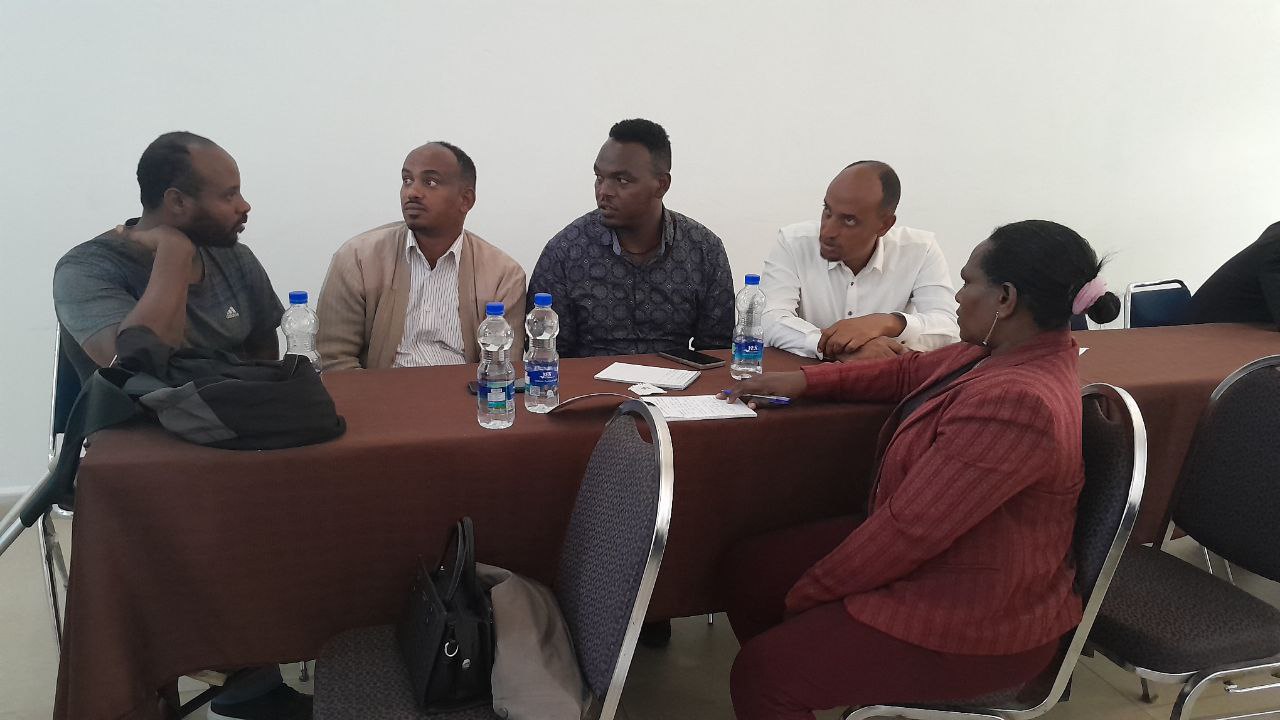
Participants shared institutional practices and challenges. Misrak Polytechnic reported computer training for blind students; Entoto Polytechnic noted one blind student in a regular music program and past training of seven blind individuals; Nifas Silk Polytechnic had trained instructors but lacked applicants; Sebeta Polytechnic offered short-term programs like mobile phone repair for students with low vision. A recurring theme was the lack of awareness among blind individuals about available opportunities.
The final session was an open Q&A where participants shared ideas, voiced concerns, and called for greater collaboration and capacity-building. The training concluded with key takeaways and a renewed commitment to fostering inclusive TVET.
Key outcomes included greater awareness of barriers faced by blind students—such as inaccessible materials and a lack of assistive technologies—and the importance of adapting curricula and infrastructure. The training also emphasized the need for stronger partnerships among TVET institutions, government bodies, and organizations like ENAB to support policy change and resource sharing.
As follow-up, participants recommended launching an awareness campaign to encourage enrollment of blind individuals, and conducting an assessment of blind trainees across the 17 colleges, including their training fields. These findings would guide future research and inform policy and curriculum revisions. Colleges were urged to welcome blind trainees, consult ENAB when needed, ensure accessible training materials, and develop new training fields suited to blind individuals’ capacities and interests.
Leave a Reply